Launch of Islamic FinTech & AI Programme
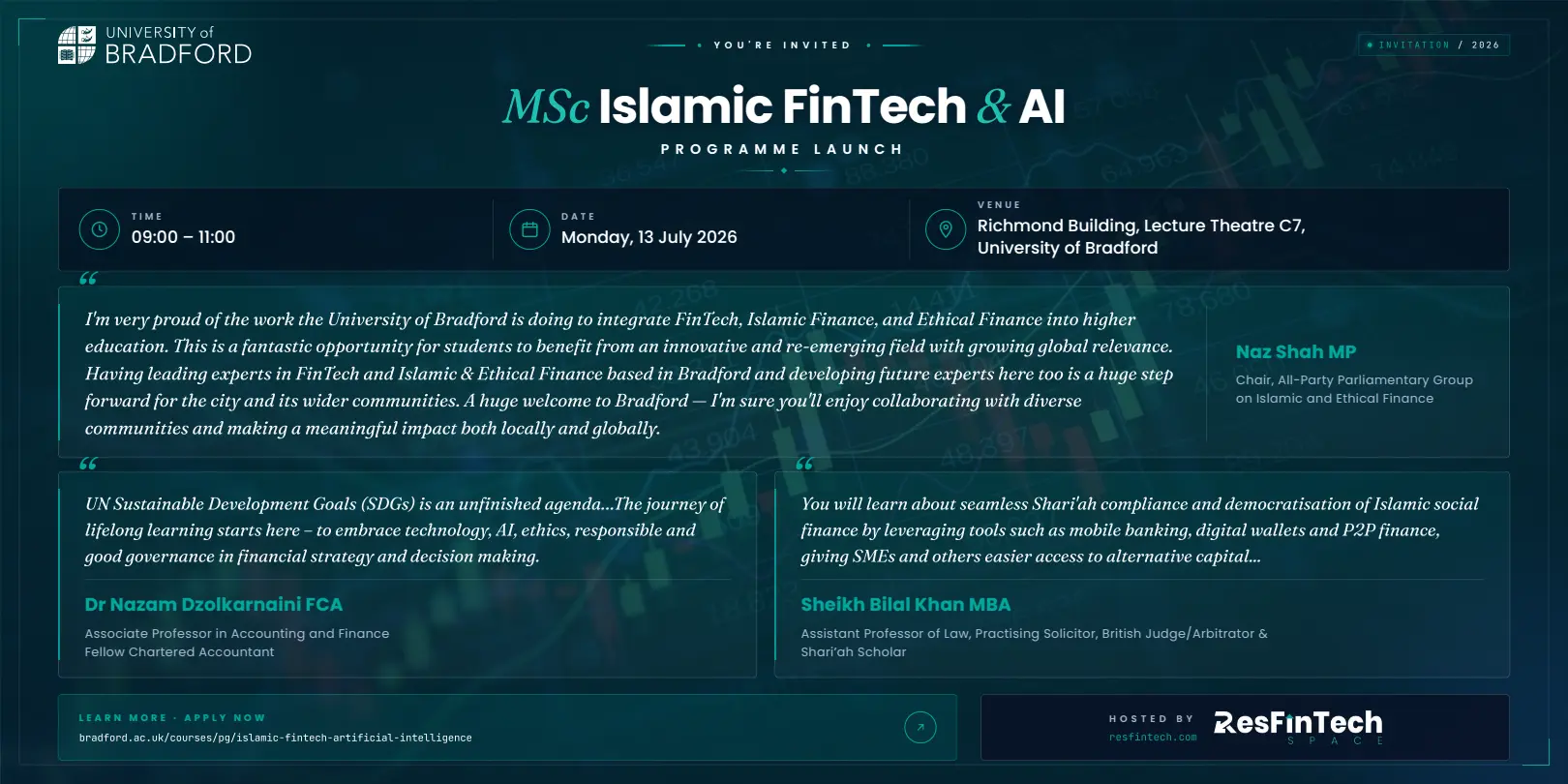
ResFinTech is hosting the launch of the MSc Islamic FinTech & Artificial Intelligence (IFTAI) at the University of Bradford.
Engineered within the World Technology Universities Network (WTUN), this new MSc degree, the first of its kind in the world, is uniquely interdisciplinary, so that graduates are strategically prepared to take on endless opportunities in Islamic FinTech sector and lead its development, where ethical finance and responsible use of financial technology and AI are in increasing demand with human rights.
Words from ResFinTech Lead
“This new MSc degree in FinTech will equip graduates with the skills needed to build a career in the rapidly expanding financial technology field.”
Dr Marizah Minhat FCCA FCA · Associate Professor in Finance and Economics · Fellow Chartered Accountant Read the full article →
Words from Co-Leaders of the IFTAI Programme
“UN Sustainable Development Goals (SDGs) is an unfinished agenda. This programme calls for brilliant minds who aspire to curate solutions for the benefits of the people and communities at large. The journey of lifelong learning starts here — to embrace technology, AI, ethics, responsible and good governance in financial strategy and decision making.”
Dr Nazam Dzolkarnaini FCA · Associate Professor in Accounting and Finance · Fellow Chartered Accountant
“This Masters degree is critical for those seeking to integrate Islamic finance, fintech and AI, which represents the future of a growing space as technological synergy is vital to the modern financial ecosystem. You will learn about seamless Shari’ah compliance and democratisation of Islamic social finance by leveraging tools such as mobile banking, digital wallets and P2P finance, giving SMEs and others easier access to alternative capital. The course will improve your understanding of blockchain and smart contracts to help automate processes of Shari’ah compliance in real-time according to AAOIFI and IFSB standards, boosting transparency and ethical investing, thereby aligning with global ESG practices and UN SDGs.”
Sheikh Bilal Khan MBA · Assistant Professor of Law, Practising Solicitor, British Judge/Arbitrator & Shari’ah Scholar
Words of support
“I’m very proud of the work the University of Bradford is doing to integrate FinTech, Islamic Finance, and Ethical Finance into higher education. This is a fantastic opportunity for students to benefit from an innovative and re-emerging field with growing global relevance. Having leading experts in FinTech and Islamic & Ethical Finance based in Bradford and developing future experts here too is a huge step forward for the city and its wider communities. A huge welcome to Bradford — I’m sure you’ll enjoy collaborating with diverse communities and making a meaningful impact both locally and globally.”
Naz Shah MP · Chair, All-Party Parliamentary Group on Islamic and Ethical Finance
Read the launch announcement on the University of Bradford website, reserve your seat at the event — or explore the full MSc programme.